How did I start this?
Across the top of this page in my journal I wrote Cognexa: A Revolutionary AI Research Assistant. The first version is running. I want an assistant that empowers human creativity, complements human intelligence, and enhances academic research without replacing human insight or judgment.
That boundary is intentional. Cognexa should sit next to researchers, not author their papers for them.
Logo creation (many versions)
I sketched three possible logos beside the first version. I picked logo number two, then started sketching a fourth. Pink C marks. Navy tech marks. Purple and green company marks. Bold black research agent marks. None of them felt final on the first try, so I kept making more.

(early geometric mark)

(pink C version)

(navy Cognexa Inc. mark)

(purple and green company and research mark)

(Cognexa Research Agent mark)
I picked one yesterday and I am already sketching another. Still iterating.
What Cognexa should do
Early brainstorming mapped the full research loop. Find a topic. Literature review. Hypothesis. Study design. Experiments. Data. Code. Analysis. Conclusions. Paper.
I wanted research sessions and branching graphs of related work. I wanted something for scientists, not another coding IDE. Cursor is for programmers. Cognexa is for people doing science.
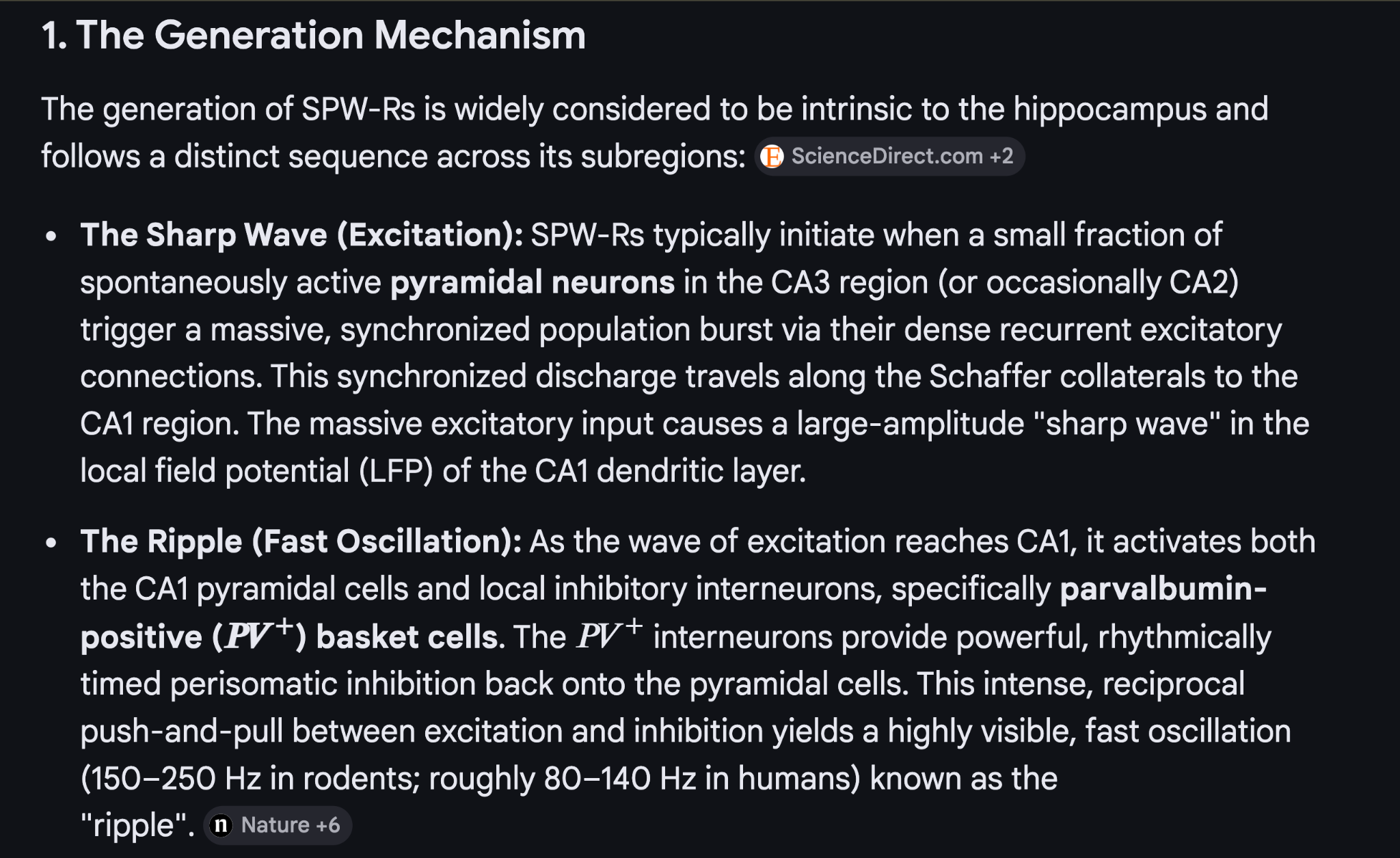
(early research assistant style output with citations)
Not just another LLM wrapper
One note I kept coming back to was Einstein. He did not think mainly in language. He thought in ideas, images, and mental simulations. Language came later when he explained the insight.
So Cognexa should not be language only. I landed on three layers.
Language layer uses LLMs for reading papers, summarizing, drafting, and talking with the researcher.
Concept layer stores knowledge as ideas and relationships through graphs and memory, not only paragraphs of text.
Execution layer runs code, simulations, stats, and tools that actually touch the work.

(concept layer sketch for nodes and edges)
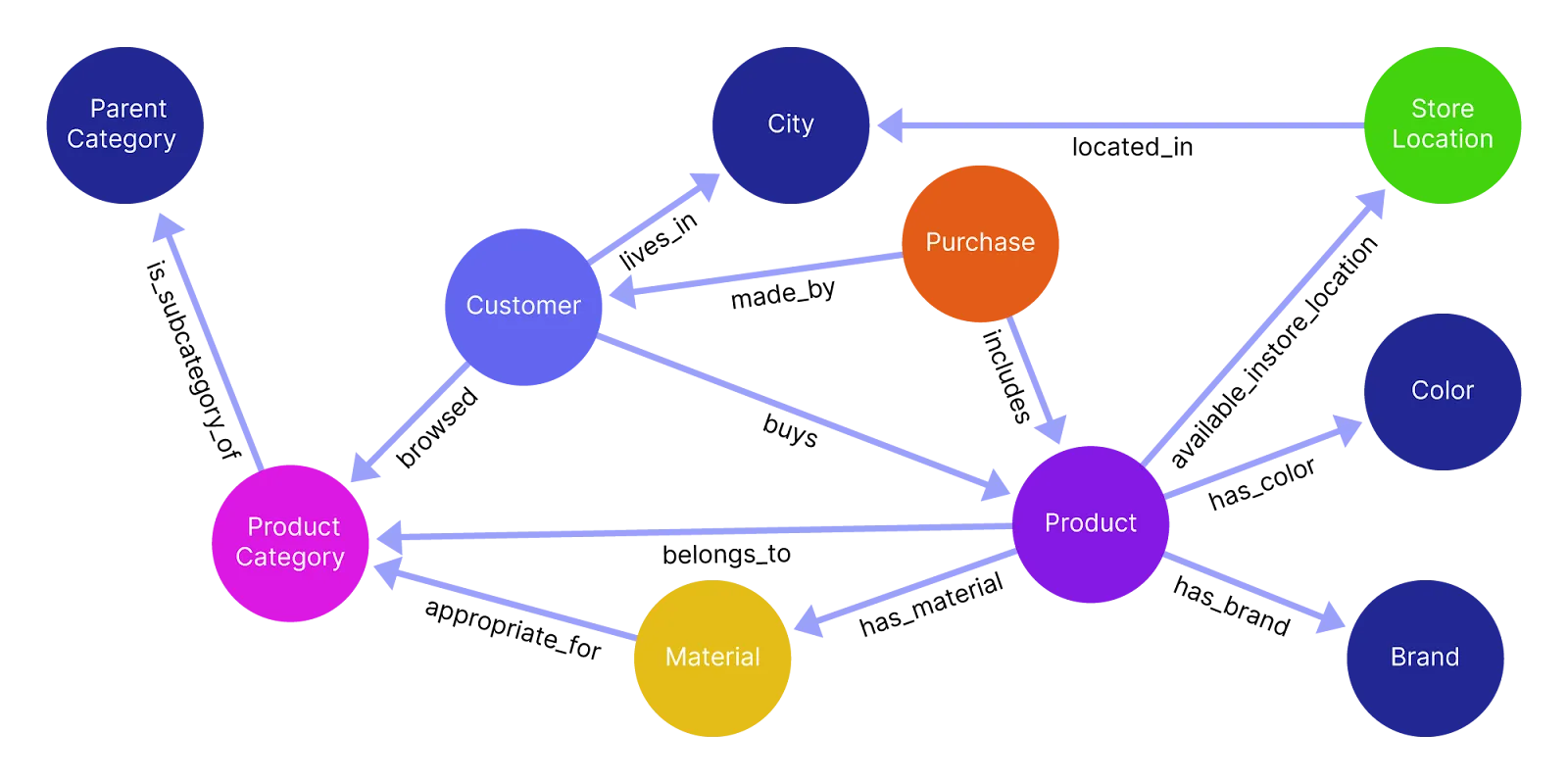
(knowledge graph style linking across a session)
Studying creativity
If Cognexa is going to help human creativity, I needed to understand how creativity works in the brain for real.
Creativity is not one module. It comes from networks talking to each other. DMN handles broad associative spreading and mind wandering. ECN style control gently keeps things goal related while you evaluate. Salience and switching decide when to roam and when to converge.
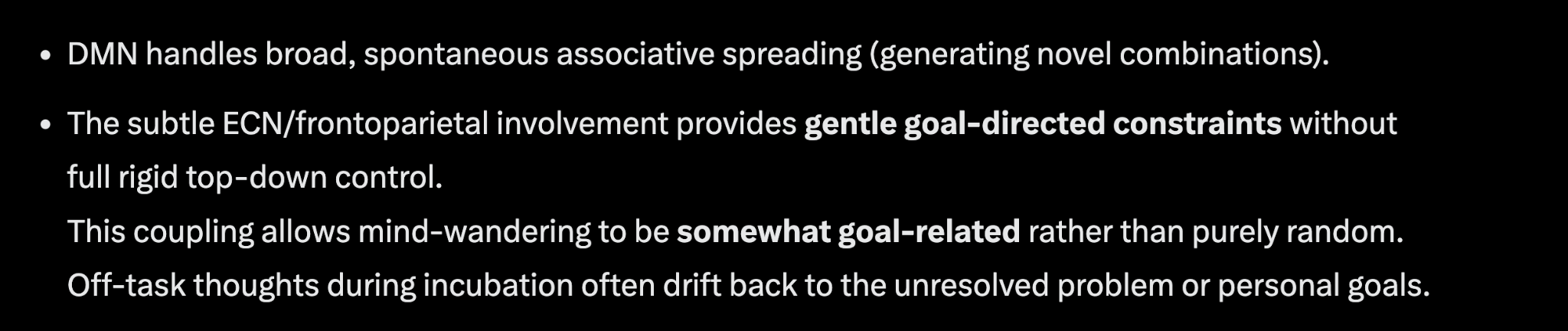
(DMN with mild goal directed constraints)
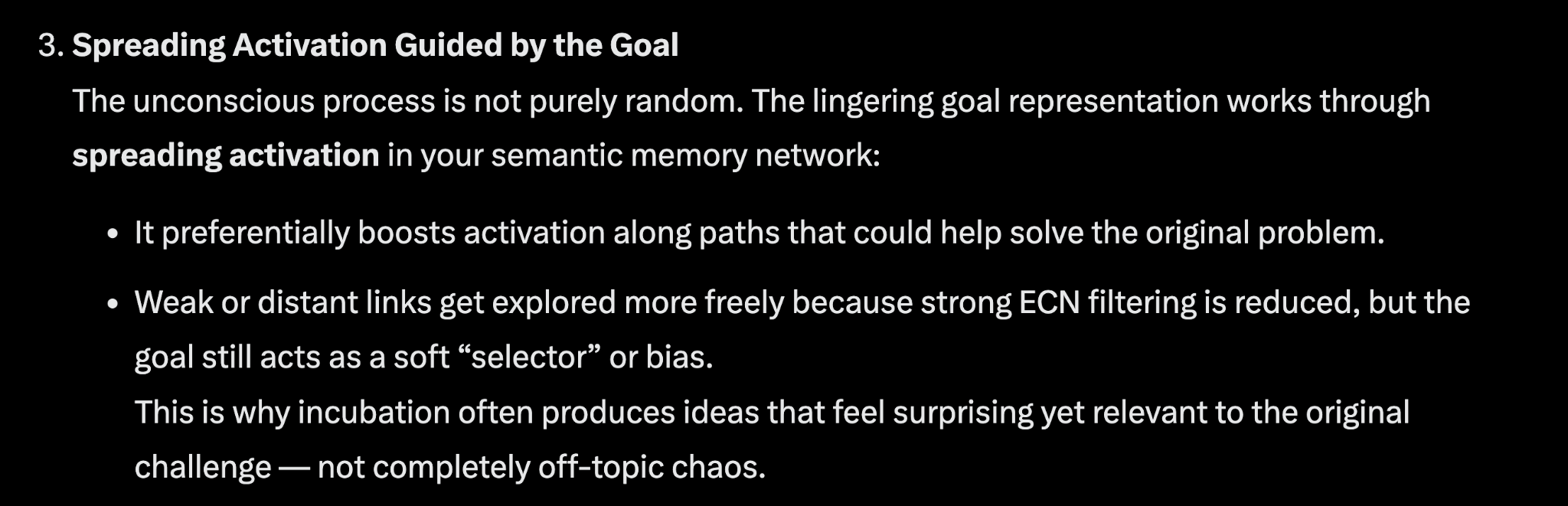
(spreading activation guided by the goal)
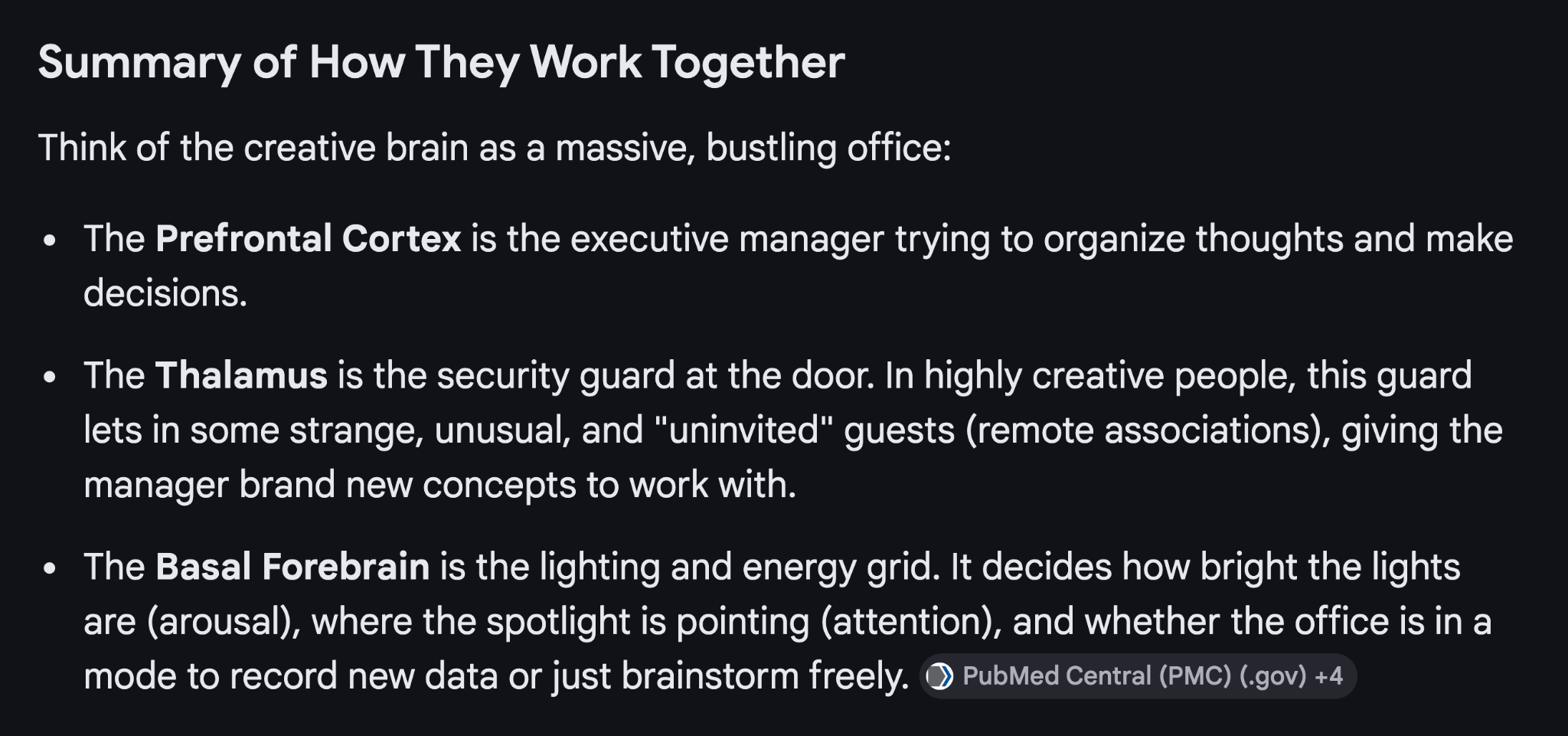
(creative brain as a busy office metaphor)
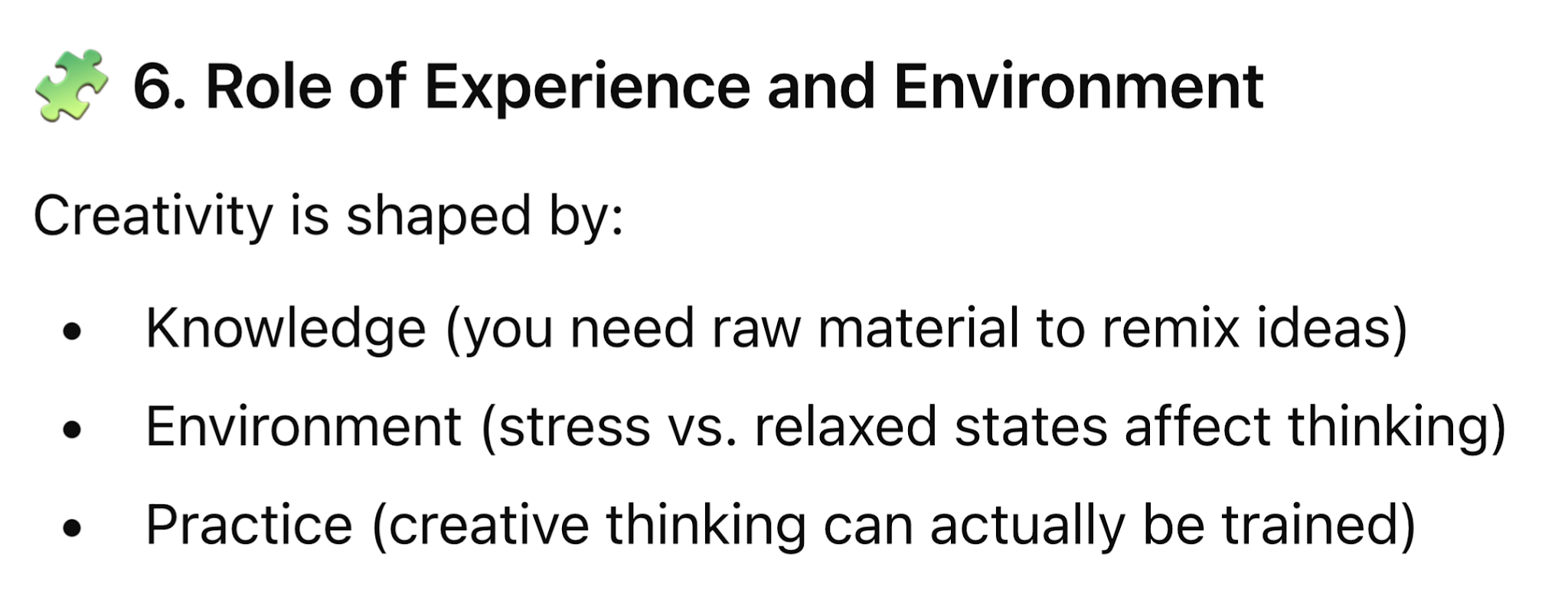
Creativity also depends on knowledge, environment, and practice. That is why Cognexa should expand a researcher’s raw material and leave room for human incubation instead of flooding people with confident nonsense.
Multi agent design inspired by brain parts
In a later brainstorm I asked what if individual agents act like different brain parts.
Idea generation, literature critique, hypothesis drafting, experiment planning, code, and paper writing should not be one flat chat. They should hand work across specialized agents, share memory carefully, and switch modes the way brains switch between divergent and convergent thinking.
I want Cognexa to recombine ideas across domains, not only retrieve similar text. I want unique interpretation of facts over dumping facts. I want room for struggle and incubation instead of always answering instantly. And I want humans in the loop for judgment, novelty taste, and final claims.
Studying creativity for this project also pushed me toward measuring creativity in my own brain, which branched into the Ironman EEG helmet as its own build. Cognexa stayed as the research assistant product.
What Cognexa is and is not
Cognexa is an AI powered research assistant. It should empower human creativity, complement human intelligence, and enhance academic research.
Cognexa is not a replacement for human insight or scientific judgment. It is not a black box autonomous scientist that publishes without a human accountable for the claim.
That boundary is the whole product. Automate the tedious search, drafting, coding, and bookkeeping. Leave taste, ethics, and the final call on what is true to the human.
Where I am now
This is still in progress. Prototype notes exist. The deeper work is turning months of creativity and neuroscience research into a tool researchers can actually use.
Next I want a usable research session flow from topic to lit review to hypothesis to notes, with citations people can trust. I want the concept layer so ideas compound across sessions. I want execution tools that stay modular and cheap. And I want the UI to keep the human as the scientist. Cognexa should sit next to them, not author the paper.
If Cognexa works, it will not look like AI did science. It will look like a human did better science, with more creative range, because they had a partner built for that.